
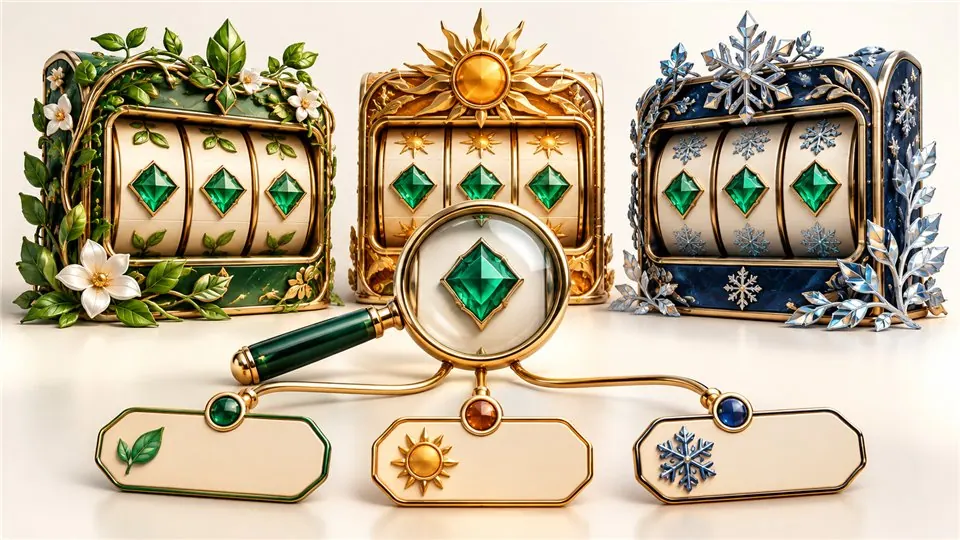
A similar name does not prove two slots are the same product, and a different name does not prove they are unrelated. Search results often mix translated labels, promotional names, editions and sequels.
The editorial task is to resolve identity before assigning specifications. Otherwise a familiar brand can become a shortcut for copying the wrong RTP, rules or release date.
Start with identifiers, not resemblance
Record the studio, full official title and product identifier where available. Compare the provider page and the exact help screen rather than relying on a thumbnail or an affiliate headline.
If an operator uses an alternate label, look for a documented mapping to the provider's product. Without that mapping, describe the relationship as unconfirmed. Similar art, a common fruit symbol or a shared word in the title is weak evidence.
A translated label needs an attributable mapping
A translated title may be an alias, but that conclusion should come from the supplier or another identifiable product record. Do not invent a regional renaming story because a literal translation seems plausible.
When an alias is confirmed, one product page can explain both names while retaining the official identity. When it is not confirmed, keep research notes separate until the relationship is resolved. That prevents contradictory facts from entering a supposedly authoritative page.
Seasonal editions are not automatically interchangeable
BGaming's Fruit Million page documents seasonal editions and says reskins can include feature changes and improvements. That is a reason to check each edition, not evidence that every edition shares an unchanged rule set.
An edition's own source and loaded rules should determine its description. Artwork changing for a holiday does not justify importing the original title's maximum award or release date without checking.
A shared brand can introduce different mechanics
NetEnt presents Starburst XXXtreme as a new chapter, with additional mechanics rather than merely a translated spelling of Starburst. A shared brand therefore does not establish a single product.
A sequel should receive its own record when its identity and rules are distinct. Related links can explain the connection without collapsing the two titles or suggesting that their specifications are interchangeable.
Keep alias evidence separate from specification evidence
A useful research record has an official name, confirmed aliases, provider, identifier, version notes and a source for each relationship. RTP and bonus conditions need their own references.
If two sources disagree, retain the conflict instead of choosing the more attractive number. A translated marketing page may also be older than the main product page; its language does not tell you which version is current.
Choose page boundaries after resolving identity
For a confirmed alias of one unchanged product, an explanatory paragraph is usually more helpful than two nearly identical pages. A genuinely distinct edition or sequel can merit a separate URL with its own data and related-title context.
Lupita should not manufacture new product pages from unverified name variations. The goal is a navigable reference catalogue, not a larger URL count obtained by duplicating uncertain identities.
Sources and review notes
Source-checked 2026-10-07. No undocumented market rename is asserted here. The named provider examples illustrate editions and sequels, not confirmed regional aliases.
Continue reading

Slot Localization: Language, Numbers and Controls Are Different Layers
Learn what a translated slot interface can change, what it cannot prove, and how to compare credits, labels and help screens without confusing locale with game configuration.

Slot Release Dates: Announcement, Launch and the Version You Open
Distinguish a planned launch from a dated announcement, market rollout or seasonal edition before calling a slot new.

Correcting Slot Information Without Hiding What Changed
See how an RTP conflict, changed launcher or renamed feature should be corrected across the catalogue, article and discovery pages.