
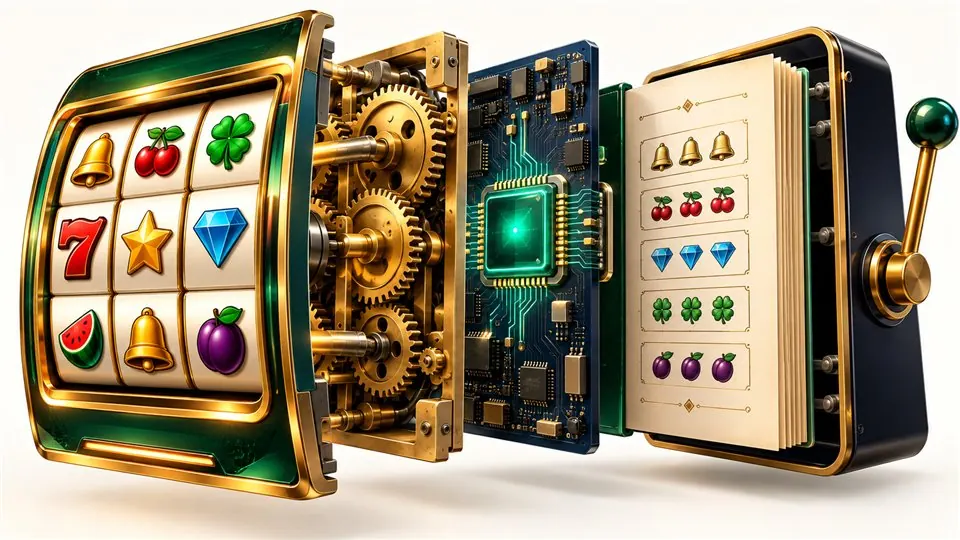
A slot is easiest to understand as three related layers: a method for selecting outcomes, rules for evaluating them, and a display that explains the result. The familiar spinning reels are the most visible layer, not a complete explanation of the mathematics.
Early mechanical devices used physical mechanisms. Modern online slots use software and may present paylines, ways, clusters or several interacting features. The exact implementation belongs to the particular title.
What happens during a round
First, the player selects a permitted stake or demo-credit amount and initiates the round. The system determines the applicable outcome under its rules, evaluates qualifying awards and updates the displayed balance. Animations communicate the result and any feature transitions.
A round can contain more than one visible stage. A cascade may evaluate replacement symbols, and a bonus can contain several feature spins. Do not assume that every animation is a new paid stake or that every provider determines every stage at the same instant.
Random selection is separate from the symbol artwork
Software can map random values to reel stops, symbol positions or other permitted results. Mapping matters: a generator can produce uniform numbers while the resulting slot symbols have unequal probabilities under the configured model.
Imagine 100 equally likely selection tickets. If eight represent a star and 92 represent other symbols, the star has an 8% selection probability even when the screen draws each symbol at the same size. This is a fictional mapping, not a claim about a particular demo. Read weighted reels for the probability distinction.
The paytable decides what counts as an award
On a payline slot, matching symbols may need to occupy a defined path and start on a required reel. A ways slot can count qualifying combinations across consecutive reels. A cluster slot can require connected groups instead. The same-looking set of symbols may qualify under one system but not another.
Special symbols add exceptions. Wild substitution, Scatter triggers, locked positions and multipliers must operate as described in the loaded rules. The paytable guide explains why the stake unit is also essential to calculating the award.
A dramatic display is not a second mathematical model
Flashing lights, rising music and large lettering can make a result feel important. To interpret it, compare the actual award with the complete round cost. Receiving 0.40 credits after staking 1 credit is an award but a net loss of 0.60 credits, regardless of the celebration.
Likewise, a near match can be visually striking without changing the next independent base-round probability. Read the result that actually qualified, not the arrangement that almost appeared.
Independence does not mean every feature has no state
An ordinary independent base spin does not become more generous because earlier spins lost. But a published feature can have a counter, collected symbols, a current multiplier or remaining respins. Those values are part of the state described by its rules.
The British RTS 7 standard prohibits compensated adaptive behaviour in its remote scope while allowing properly described bonus features with different rules. A visible counter should therefore be interpreted using its actual rule, not as evidence that the whole slot owes a win.
How to explore these layers in a demo
Open the rules before pressing Spin. Identify the win system and award unit. During an observed result, trace the qualifying symbols, any modifier and the final credit award. If a feature does not appear, you can still describe its published rules and mark it unobserved.
Independent laboratory testing is a different activity. GLI's RNG submission specifications illustrate the need for implementation information and collected data. Watching a demo's animation does not provide that evidence.
Sources and review notes
Source-checked 2026-10-07. Regulatory references apply within their stated jurisdictions, not to every demo or country. Practical examples are explanatory, not provider certification or predictions of future results.
Continue reading

How Online Slots Use RNG: Selection Is Not Reel Animation
Understand random-number generation, mapping and payout evaluation. Learn what testing checks and why a reel animation cannot expose the next result.

How to Read a Slot Paytable: Symbols, Stakes and Bonuses
Understand slot paytables with worked examples of line wins, total-stake multipliers and ways. Check Wild exceptions, bonus triggers and payout limits.
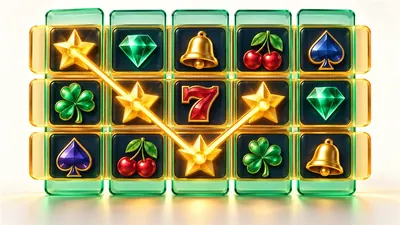
Reels, Rows and Paylines: How to Read a Slot Layout
Read the difference between a slot grid and its winning paths. A worked five-reel example explains why matching symbols need the right positions.

Weighted Reels: Why Visible Symbols Do Not Reveal Slot Odds
See how symbol weighting works with a simple example, why equal-looking symbols can have unequal chances and what a demo cannot disclose.